助詞ってなに?
Japanese has many particles. Here, we’ll start with five of the most important ones for beginners and focus on their most common uses.
Here, は shows what the sentence is about: わたし.
5つの基本助詞
Start with these five common particles. Each one has a different basic job.
Shows what the sentence is about.
Highlights who or what is important.
Marks the thing an action is done to.
Shows where or who an action is directed toward.
Shows where an action happens.
イラストで見てみよう
Look at how each particle works in a sentence.
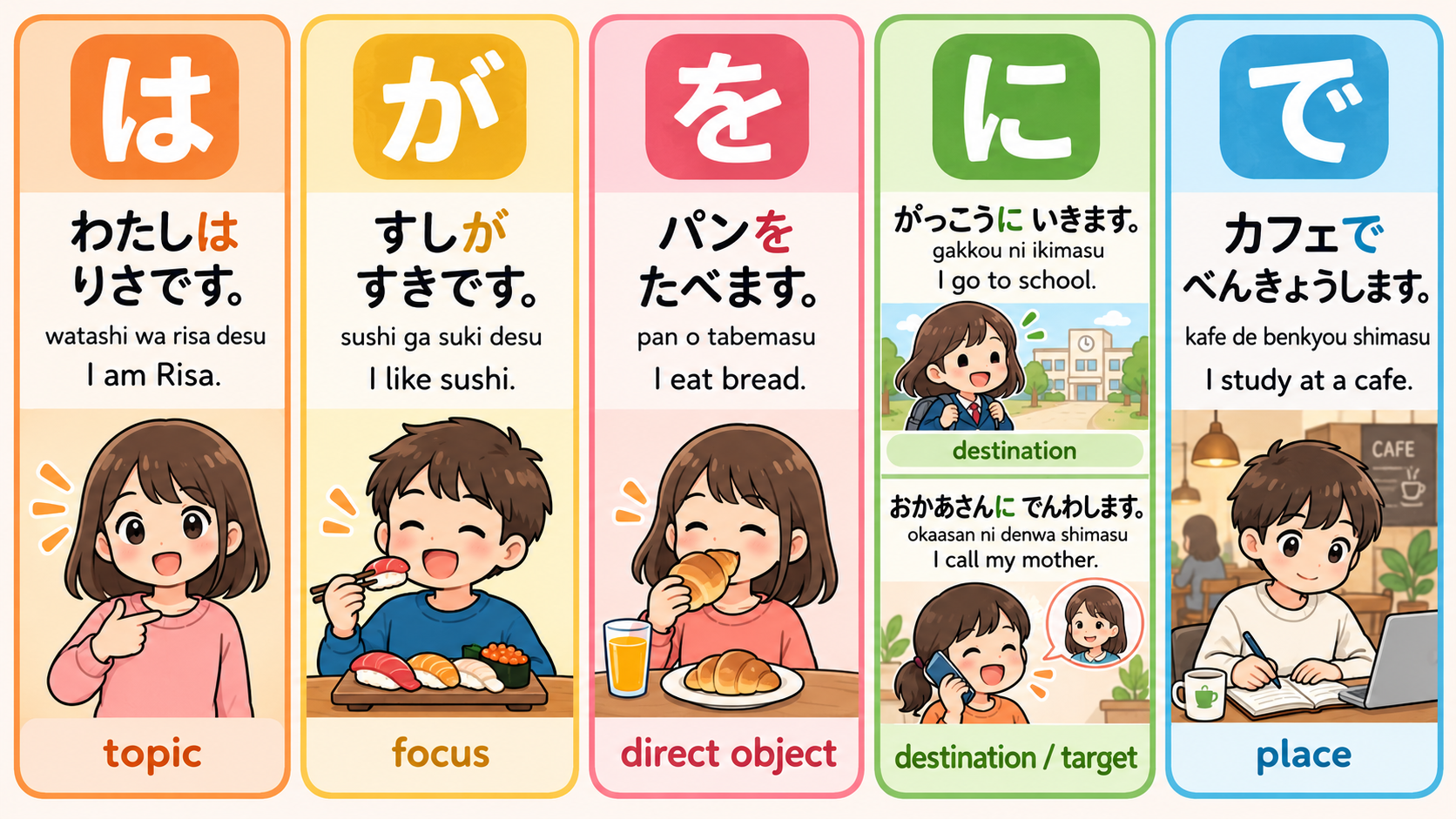
それぞれの助詞
Each particle can have more than one use. Let’s start with the patterns beginners use most often.
は shows what we are talking about. Think of it as setting the topic of the sentence.
I am Risa.
It is hot today.
が often identifies or highlights who or what is important. It is especially common when answering questions like “who?” or “what?”
Who came?
Risa came.
You will also often see が with います / あります and expressions like すきです.
There is a cat.
I like sushi.
を marks the thing that an action is done to.
I eat bread.
I speak Japanese.
に shows a destination or target: where something goes, or who an action is directed toward.
I go to school.
I call my mother.
I meet my friend.
I get on the train.
に is also used with specific points in time, such as clock times.
I wake up at 7:00.
で shows the place where an action happens.
I study at a cafe.
I read a book at the library.
で can also show how you do something or what you use, including transportation, tools, and language.
I go by train.
I eat with chopsticks.
I speak in Japanese.
似ている助詞を比べよう
Some particles can look similar at first. Compare them in real situations.
「は」と「が」はどう違う?
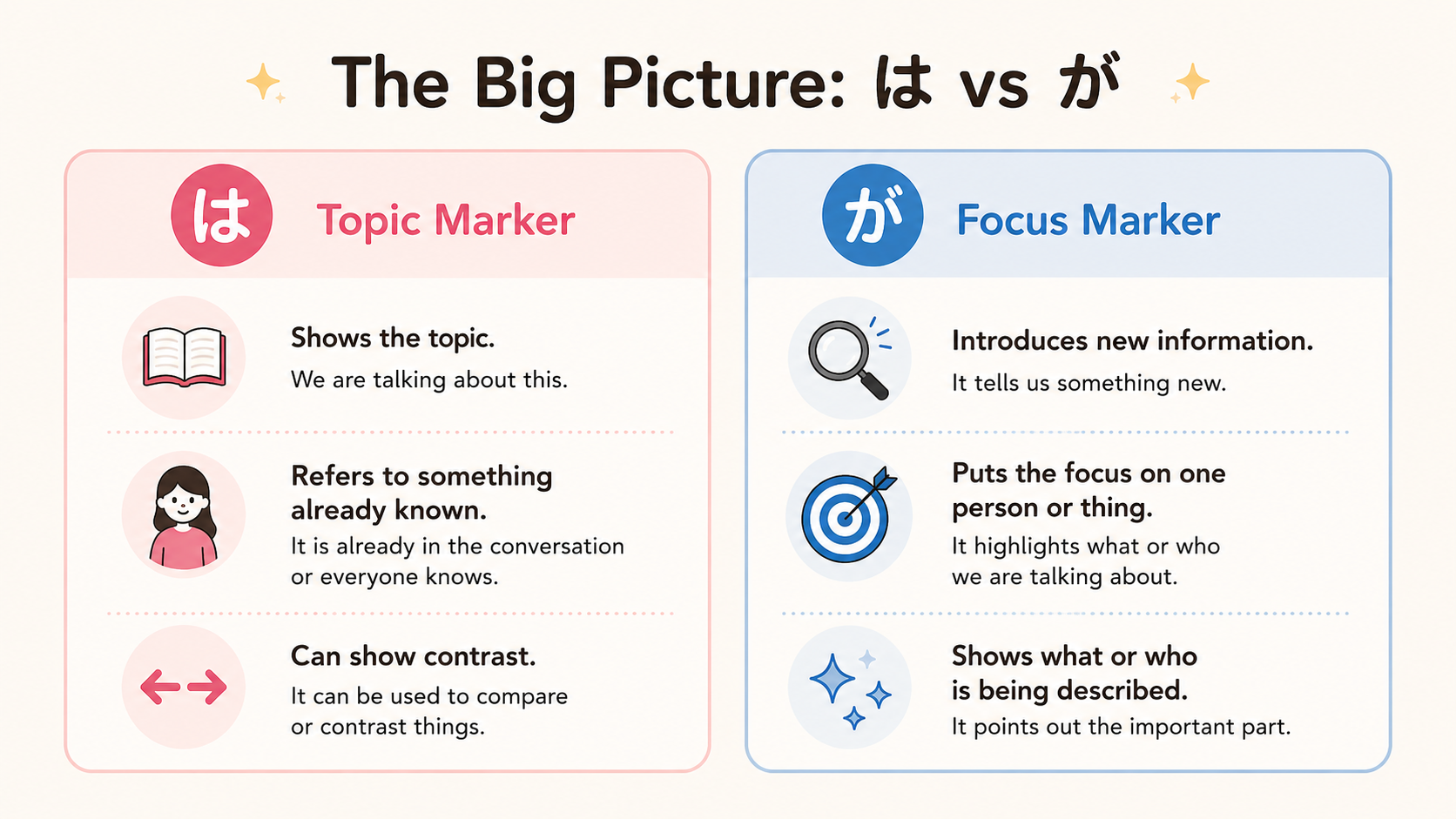
Both は and が can mark a person or thing, but they put the focus in different places.
は shows what we are talking about.
が puts the focus on who or what is important.
は often marks an already-known topic. が can introduce or highlight new information.
New information can first appear with が. After it becomes the topic of the conversation, は can be used.
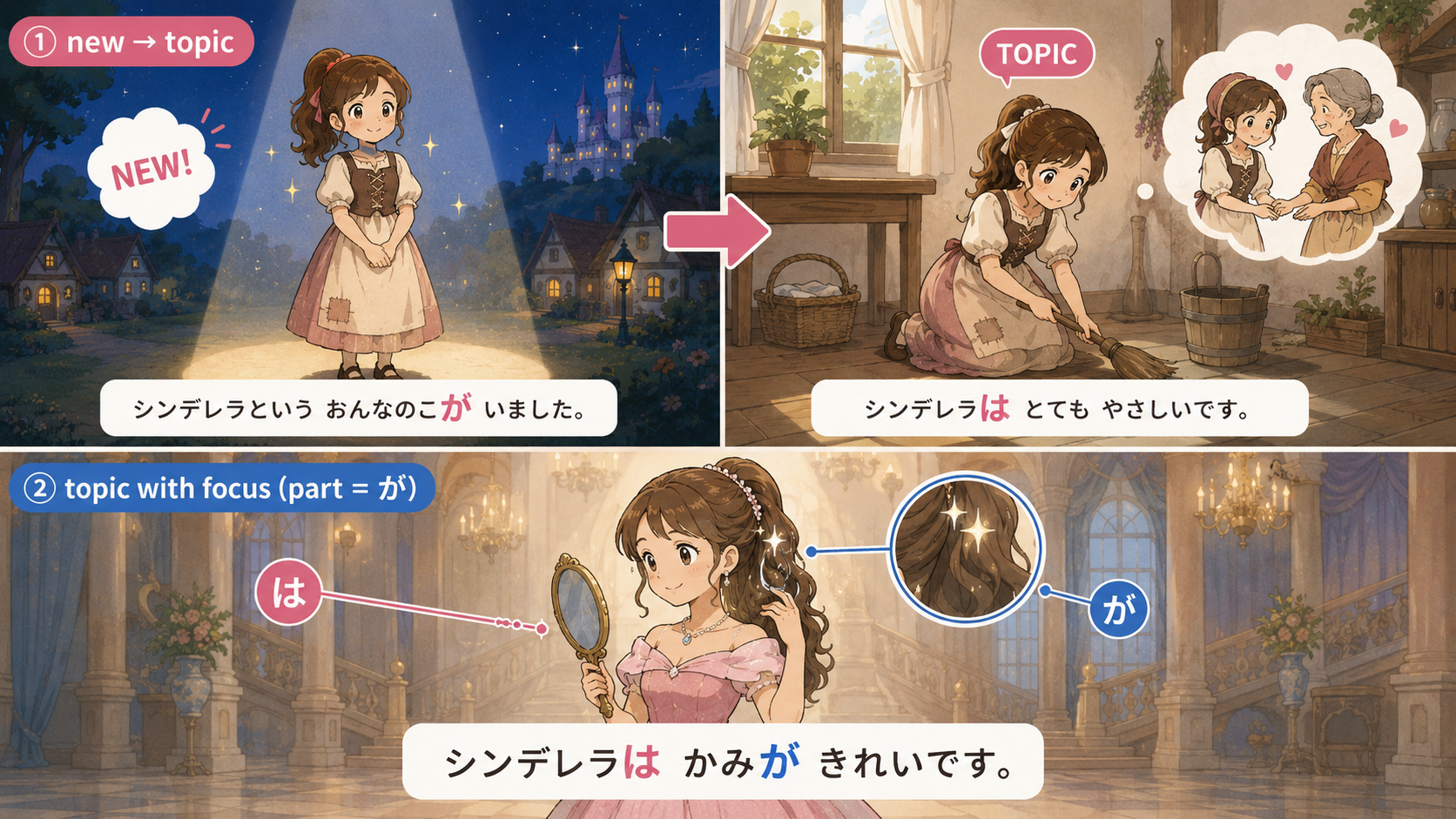
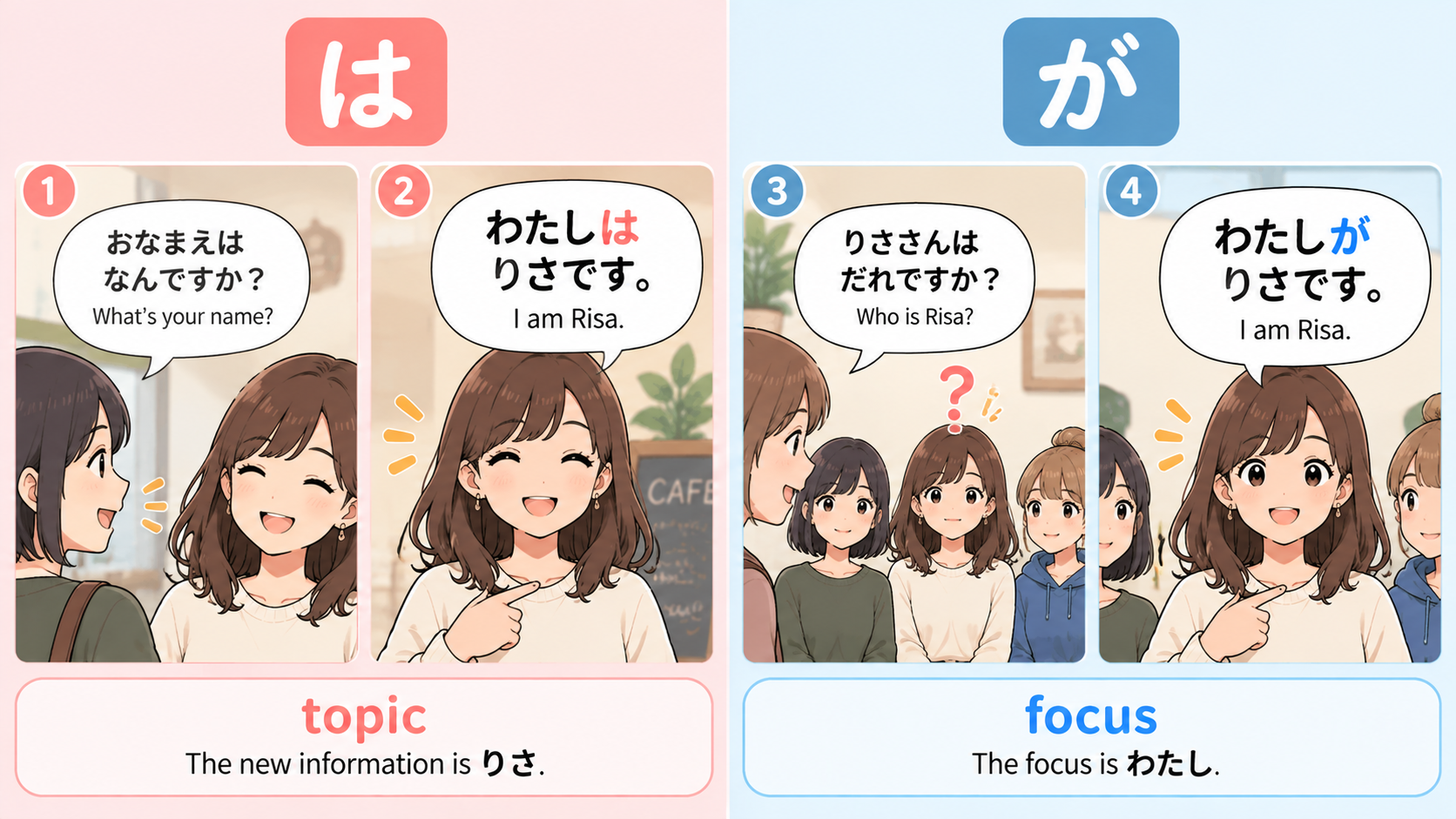
は can set the topic, while が can show the specific part being described.
Compare が and は in the same situation. With が, the sentence simply describes Cinderella’s hair. With は, depending on the context, the listener may feel that her hair is being contrasted with something else.
Cinderella’s hair is beautiful.
As for Cinderella’s hair, it is beautiful.
With は, the listener may think: “Her hair is beautiful… but what about something else?” This contrast depends on the context.
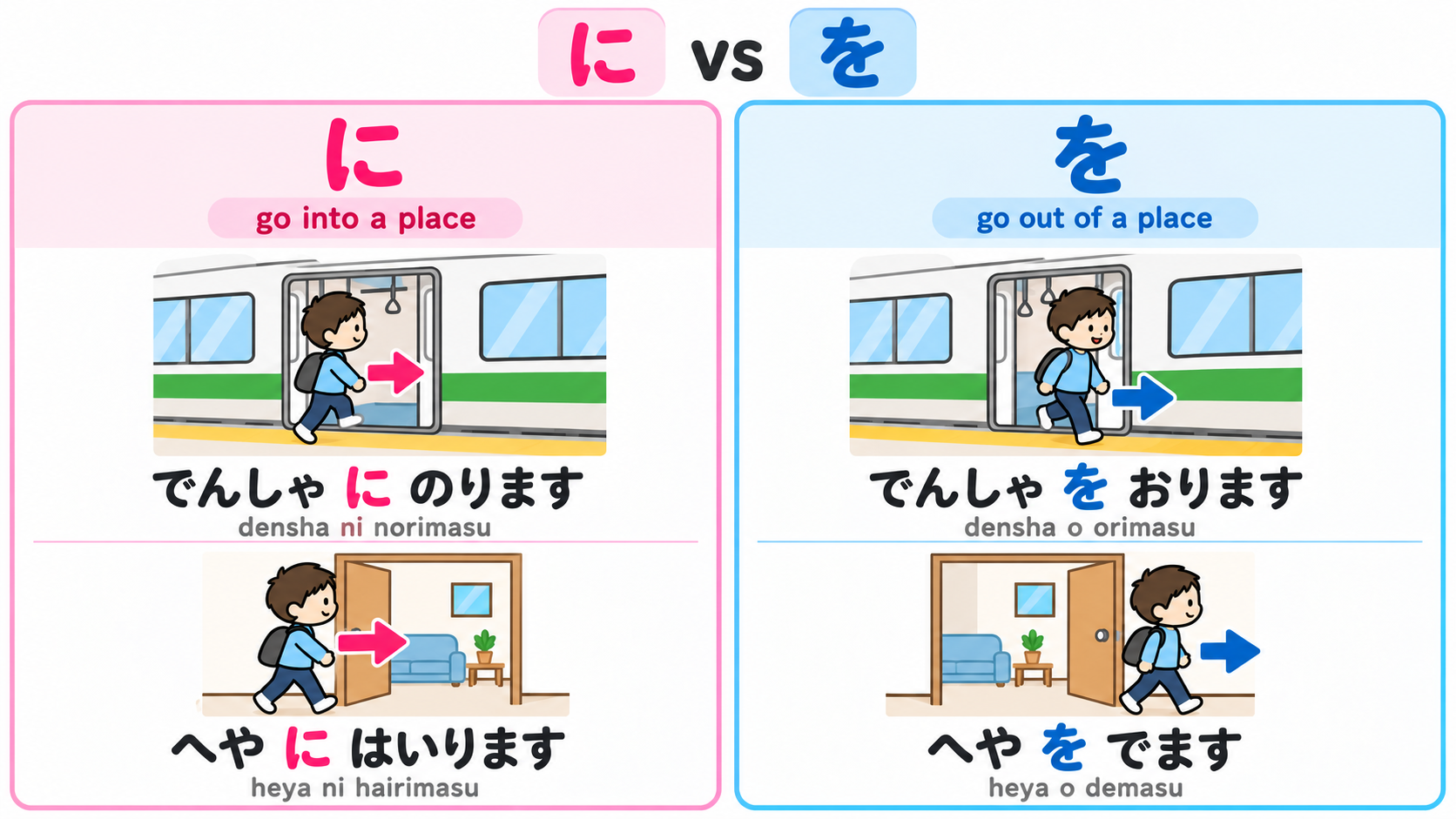
入る? 出る?
Use に for a destination or goal. Use を when leaving or moving through a place.
I get on the train.
I enter the room.
I get off the train.
I leave the room.
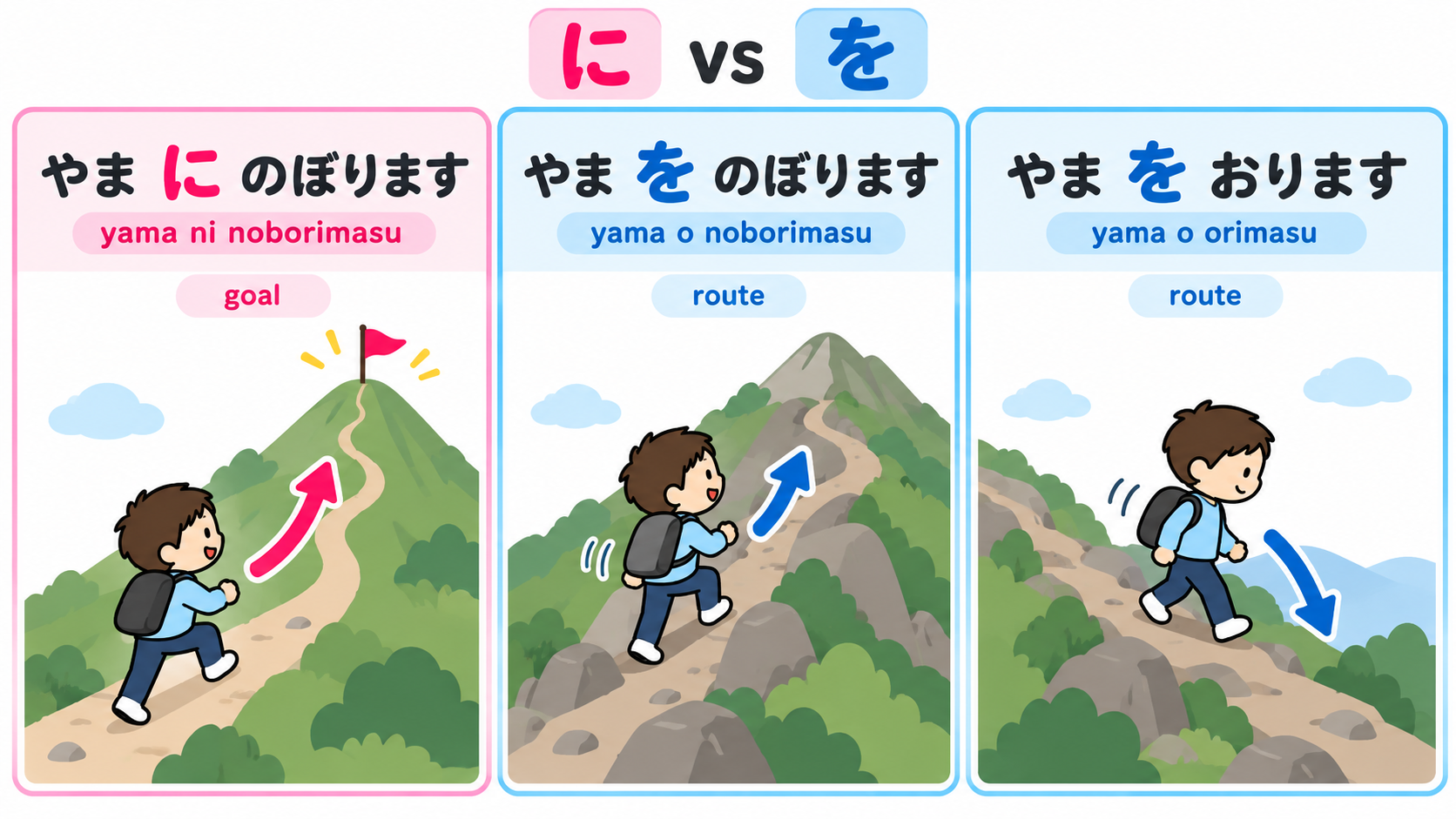
You don’t need to memorize this yet. Just notice that を can sometimes show the route you move through.
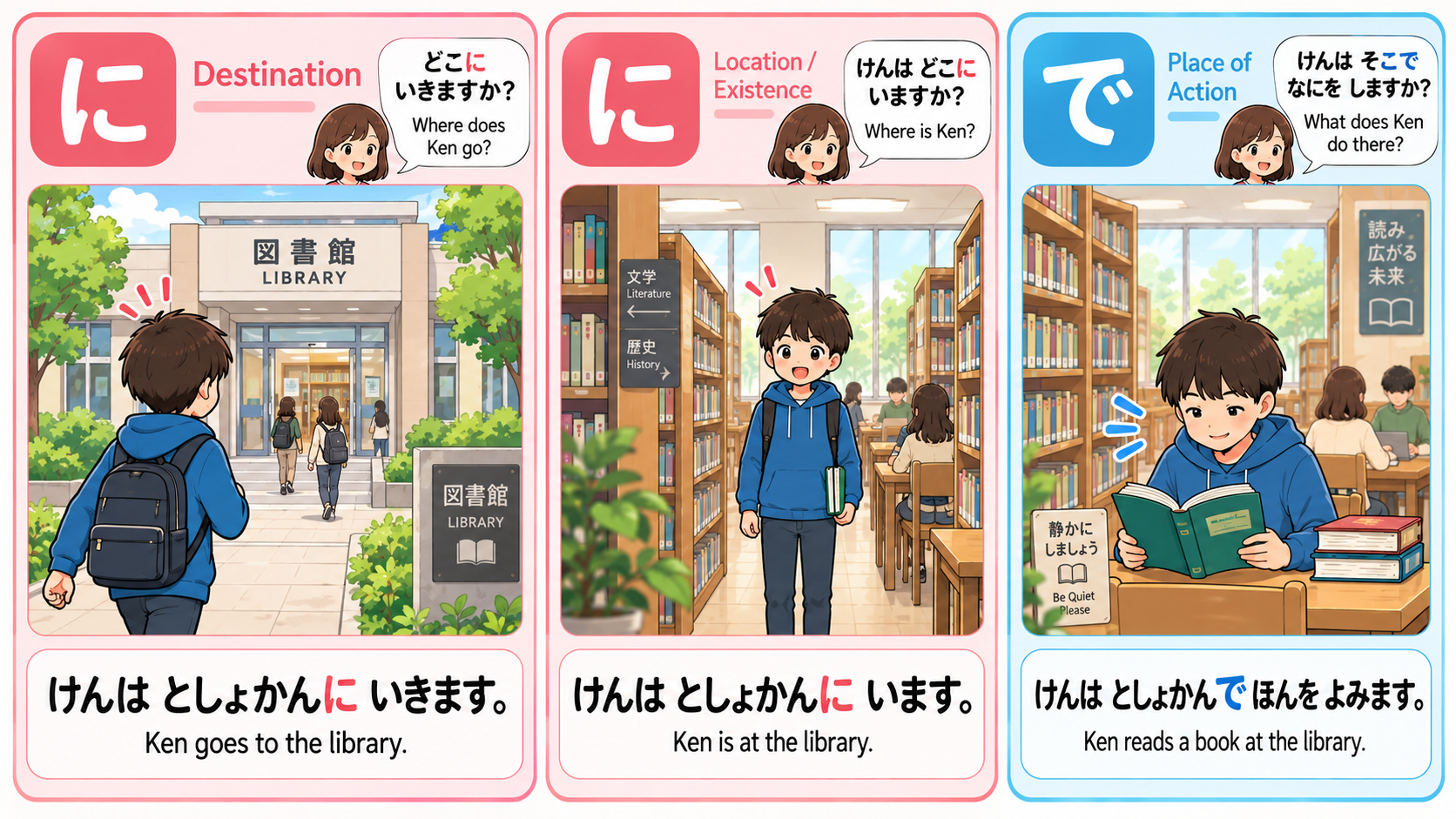
そこに行く? そこにいる? そこで何かする?
The particle depends on what happens at the place. Compare these three common patterns.
Ken goes to the library.
Ken is at the library.
Ken reads a book at the library.
Don’t choose the particle from the place alone. Look at the verb and ask what role the place has in the sentence.
助詞を選んでみよう
Choose the best particle for each situation. Tap to check your answer.